
781.512.7272
Call Kuhlman - Open xx

® It's Electric!!!Backup power for you home can be delivered in two ways. One is a portable generator setup and the other is a whole house system. Yes I know there is a third option, which is a battery backup system such as a Tesla Powerwall. For the purposes of this blog post we’ll stick to the two generator options as the Powerwall’s are far beyond most people’s budgets.
So, how do you decide between the two? This is a great question and can honestly be quite challenging. It really comes down to your own situation, and how much effort (or money!) you are willing to expend to make it happen.
A whole house generator system is a generator that is installed in a fixed position in your yard. Its electrical output ties into your electrical panel through an automatic transfer switch. This means that if your power goes out, the generator will automatically kick on and power your home. When the utility power comes back on, the generator will kick back off. These generators are powered through gas or propane. Whole house generators come in all different sizes and can be sized to literally power your entire homes electrical load if needed. Yes that’s right, if you want a whole house generator to pick up an entire 200amp load, that’s an option!! If a smaller generator is used to save money, there are load shedding modules that won’t allow the heavy electrical loads to run while in generator power. Heavy loads such as A/C, electric range, etc.
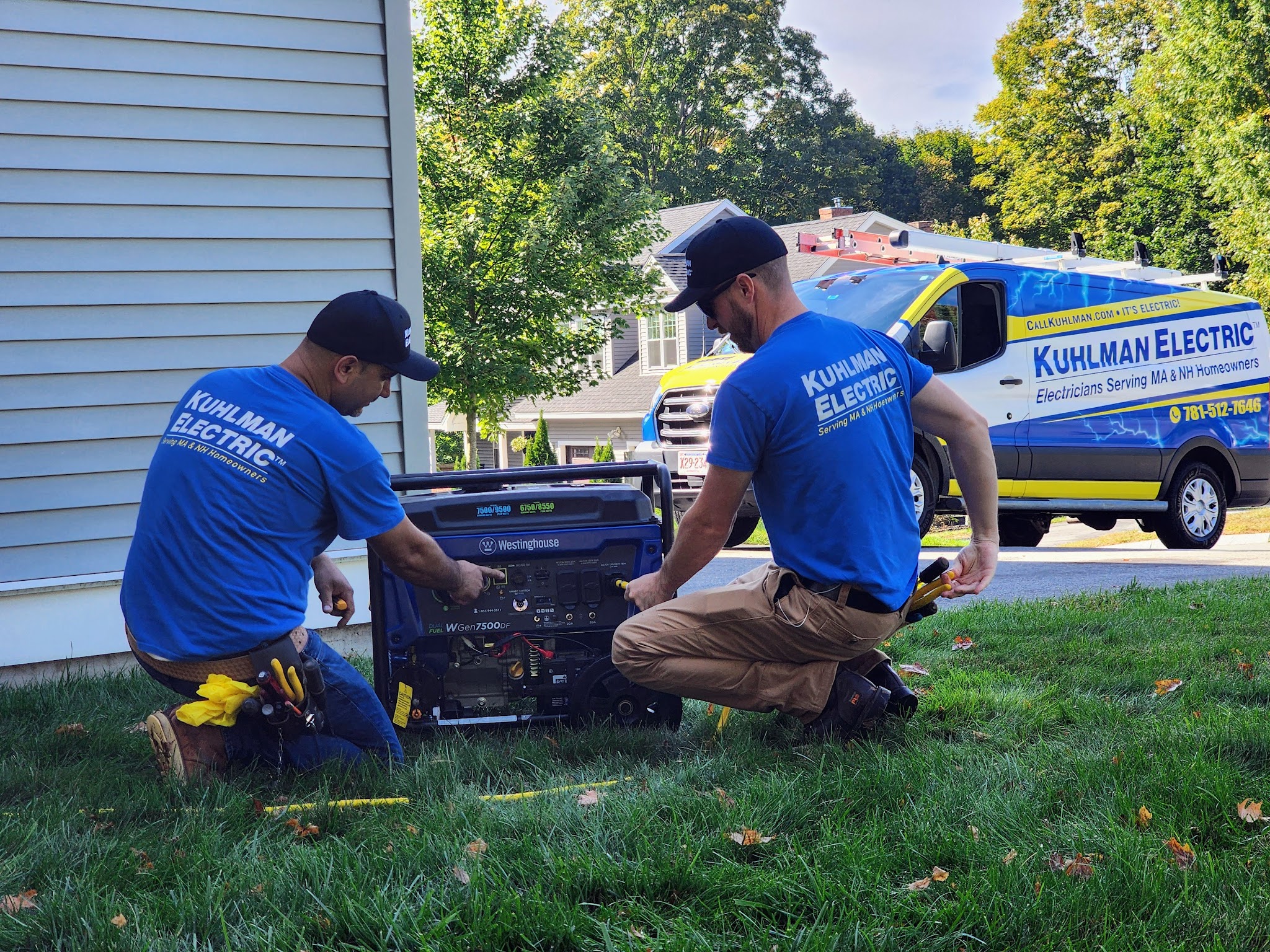
A portable generator system is a smaller movable generator that you store somewhere on your property and pull out when needed. These generators will tie into your homes electrical system through a manual transfer switch or panel. There are a few different options on the manual transfer we’ll cover in another blog post. These generators run on gas or propane (or both!). Portable generators also come in a wide range of sizes, typically between 4,000 watts and 12,500 watts. These generators will not be able to power heavy electrical loads.
Let’s start with some pros and cons of each generator system.
Personally, I’m a huge a fan of both options. At my own house I have a portable generator with a basic manual transfer switch. The main reason being the power at my house has never gone out in the 2 years I have been here. I can’t justify paying for a whole system that may only get used once every few years if that. My house also has all gas appliances (heat, range, hot water) so the electrical load is on the smaller side, making it a good fit for a portable generator. I do have 2 A/C systems and I’m OK with not being able to use those under generator power. That’s a tradeoff that needs to be made going with the smaller portable setup.
After looking at the pros and cons ask yourself these last few questions –
We install both of these options quite often. I’d say 90% of our customers go with the portable generator setup and the remainder with the whole house system. I had a customer a few years back that was dead set on the whole house system. Upon meeting this customer for an estimate I laid out all the pros and cons that you are finding here. By the end of it, he changed his mind and went with a portable setup. It’s been 3 years and we recently worked at his house and I asked about the generator and how it’s been working. He said I don’t even know, the power has not gone out since you installed the manual system! It’s funny; sometimes it just works out that way. He was very happy he didn’t pony up the 10k+ for the whole house system!
Please check back for a blog post about picking out the correct portable generator for you.
Also, make sure to check out our blog on interlock kits