
781.512.7272
Call Kuhlman - Open xx

® It's Electric!!!So you have decided to use a portable generator for emergency power, but confused by the options to connect it to your house? Believe me you are not alone! There are two main options, one being a manual generator panel and the other an interlock kit that ties into your existing panel. There are a number of things to consider when picking between these two options, so
let’s dive in!

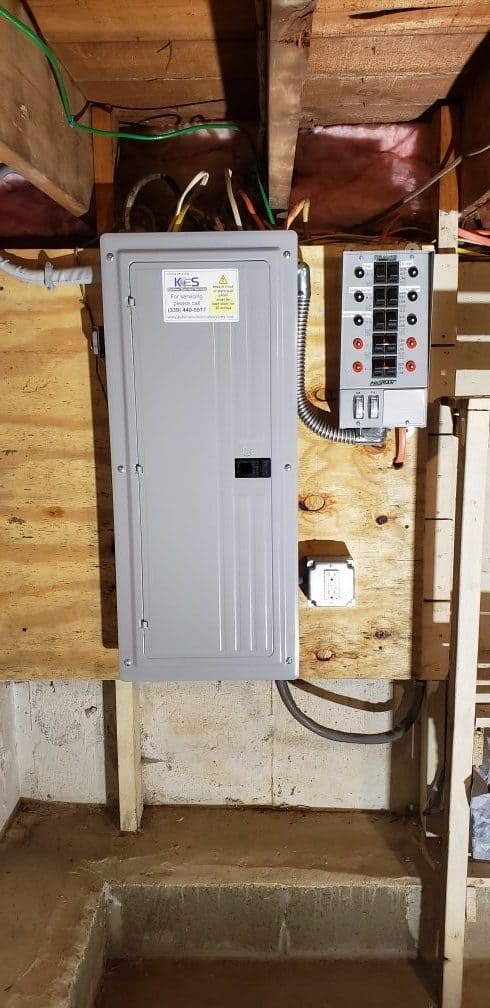
This panel of 6-10 circuits (or more) will tie into your existing electrical panel. You will choose the circuits you want to power while on generator power. When power is out, you start your generator up and simply flick the switches on this panel to GEN and off you go!
One reason we really love this option is we have more control over the things your generator will power. With this option, you are less likely to overpower the generator.
This customer planned to only power a few circuits under generator power, but still wanted the future flexibility of powering additional ones if he upgrades his generator. We went with the 10 circuit panel which is by far the most common size we install.
An interlock transfer switch is mounted in your existing electrical panel. When power goes out you will turn OFF the circuit breakers that your generator cannot support. Things like your electric range, electric dryer, A/C, electric water heater etc. At this point you can start up your generator, turn OFF your main circuit breaker, and turn ON your generator breaker. Once those steps are taken, your entire panel is being powered off your generator.
If you feel capable of managing your own loads, then this is a great option. It’s critical you turn OFF those heavy loads though, before powering the generator up. Otherwise you will over power the generator.
With either option, you will be given a male outlet sized to your system. Most commonly a 30amp outlet. This can be installed in your basement at the panel / generator, or more conveniently outside where the generator will sit.
From your generator you will have a heavy duty cord (again rated for the load) which will connect the generator to the male outlet. These cords come in all kinds of different lengths and can get fairly pricey once you get to 40’ and above.
My recommendation is to ALWAYS install the generator outlet outside in the vicinity of where the generator will sit. Yes it does cost a little bit extra to install this outlet, but you will save money on a long cord. Plus it makes for a way cleaner installation. Imagine running the generator cord through a window or leaving a door open a crack to feed the outlet inside?
So which one is the one for me? Let’s look at the pros and cons of each
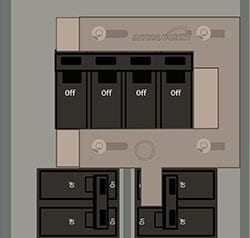
I’m a huge fan of the interlock kit with customers who can manage their loads and have selected a good size generator. Good size to me means a 6000-7500 watt running generator for most homes. If you can’t handle managing the loads yourself, then the generator panel is a no brainer.
There are a few things to consider:
Most of our customers go with 6000-7500 watt units; this seems to be the perfect size for most homes. It allows you to power a good portion of your home, while staying in an affordable range. Keep in mind that with some careful planning, powering some of the higher wattage appliances could be possible with a generator in this range. An electric dryer for example may draw ~ 5,000 watts. If no other heavy loads are being used while running the dryer a 7,500 watt unit will work just fine. That’s just one example that could be applied to other electrical loads of similar size.
Click here to read a more in depth write up about choosing the right portable generator unit for you!
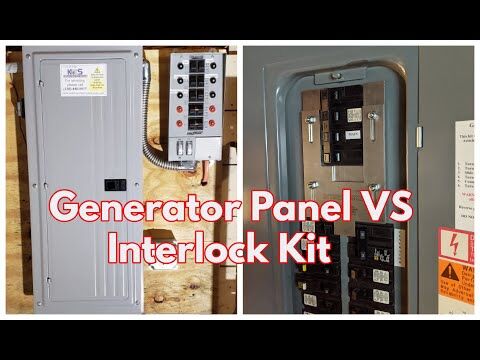
OR check out the Kuhlman Electric YouTube page by clicking the thumbnail below for a more in-depth video explanation.
Let us know if you need any more help picking a manual system for your home, our electricians would love to help!
Also, make sure to check out the blog on whole house generators vs portable generators