
781.512.7272
Call Kuhlman - Open xx

® It's Electric!!!A whole-house generator is one of those systems most homeowners hope they never need but rely on completely when the power goes out. The challenge is that standby generators spend most of their life sitting idle. That’s exactly why routine maintenance matters so much. Even if your generator has never run through an outage, it still needs attention every year to stay dependable.
Standby generators are mechanical systems with engines, batteries, fuel components, and electrical controls. Like a car that only gets used occasionally, sitting idle can actually create problems over time. Fluids break down, batteries lose charge, and small issues can go unnoticed until the moment the system is needed most.
Annual service ensures your generator is ready to perform instantly when the grid fails, not after a delay or malfunction.
A yearly maintenance service covers the key components that directly affect whether your system will start and run properly during an outage. During a maintenance visit, technicians typically perform tasks such as:
Each of these steps plays a role in making sure your generator and its supporting components work together as a complete system. Small issues are much easier to address during routine service than during an active outage.
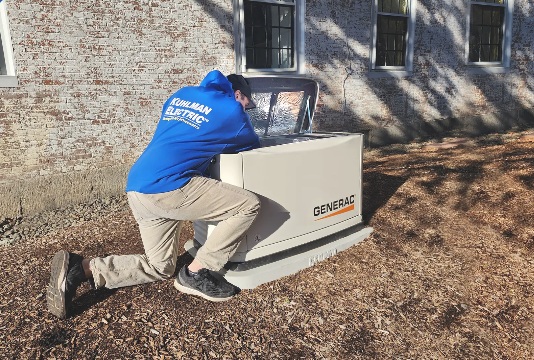
Most generator failures are preventable and often come down to lack of maintenance. The most common issues include:
Without regular maintenance, these issues often remain hidden until the moment the system is needed.
Maintenance pricing can vary depending on generator size and condition, but most quotes will include labor, oil and filter changes, system testing, and diagnostic checks. Some homes may also need replacement parts like batteries or air filters which can change overall pricing.
When speaking with a contractor, it helps to ask:
Clear expectations help avoid surprise fees and ensure your system is fully checked.
In Massachusetts and New Hampshire, the best time to schedule generator maintenance is typically late summer or early fall. This timing prepares your system before storm season and winter outages, when demand on the electrical grid is highest. Scheduling ahead of peak weather seasons also helps avoid service delays.
If you have questions about your standby generator, are unsure when it was last serviced, or need a new one installed, Kuhlman Electric™ is here to help. Our team can inspect your system, identify potential issues, and make sure everything is ready before you need it. Reach out today to schedule service or speak with a licensed electrician about your generator setup. We proudly serve homeowners in Eastern and Central Massachusetts as well as Southern New Hampshire.