
781.512.7272
Call Kuhlman - Open xx

® It's Electric!!!If you own an older home in Massachusetts or Southern New Hampshire, there’s a chance it still contains knob and tube wiring. While this wiring method was standard in homes built before the 1950s, it’s now considered outdated, and many insurance companies flag it as a concern.
But why do insurers take such a strong stance on knob and tube wiring? And what does it mean for homeowners?
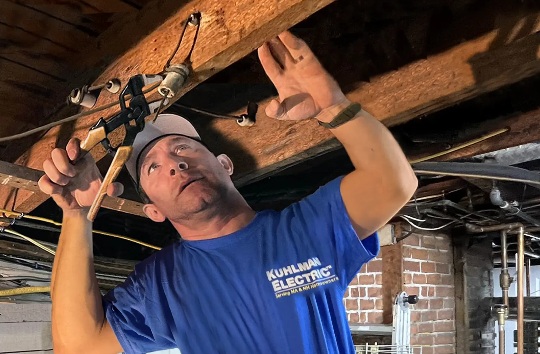
Knob and tube wiring was one of the earliest standardized electrical systems used in residential construction. It gets its name from the ceramic “knobs” that hold wires in place and the “tubes” that protect wires as they pass through wood framing.
At the time, knob and tube was an effective solution. However, it was designed for a much different era, before modern appliances, central air conditioning, home offices, and EV chargers dramatically increased electrical demand.
Insurance companies primarily flag knob and tube wiring because of fire risk. Over time, the rubber insulation around the wires can become brittle and deteriorate. When insulation breaks down, exposed wires can overheat or spark.
Additionally, knob and tube systems do not include a ground wire, which is a critical safety feature in modern electrical systems. Without proper grounding, the risk of electrical shock and fire increases.
Another major concern is capacity. Knob and tube wiring was designed to support minimal electrical loads that included only lighting and a few small appliances. Today’s homes rely on far more power.
When modern appliances are added to older wiring systems, circuits can easily become overloaded. Overloaded wiring generates heat, which increases the likelihood of electrical fires. Insurance companies recognize this mismatch between old wiring and modern demand as a significant liability.
Many homes with knob and tube wiring have been partially modified over the decades. It’s not uncommon to find modern wiring spliced into older knob and tube circuits. These alterations are often not done to current code standards and can create unsafe connections hidden behind walls.
Because insurance providers cannot always verify the condition of the wiring inside your walls, they often err on the side of caution and require replacement before issuing or renewing a policy.
If your home still has active knob and tube wiring, you may face:
In competitive real estate markets, knob and tube wiring can also complicate home sales, as buyers may struggle to secure affordable insurance coverage.
If your home has knob and tube wiring, the first step is a professional evaluation. An experienced, licensed electrician can determine whether the wiring is still active, assess its condition, and recommend the safest path forward.
In many cases, full or partial home rewiring is the best long-term solution. Upgrading to modern, grounded wiring improves safety, increases capacity, and helps ensure your home meets current electrical codes.
Kuhlman Electric has been serving homeowners in Massachusetts and Southern New Hampshire since 1988. Our licensed electricians have extensive experience inspecting and replacing knob and tube wiring in older homes.
We provide thorough wiring evaluations, clear and detailed estimates, and a carefully planned rewiring process designed to minimize disruption to your home. Whether you need an inspection for insurance purposes or complete knob and tube wiring replacement, our team is here to help.
If your insurance company has flagged your wiring, or you simply want peace of mind, contact Kuhlman Electric today to schedule a professional inspection or learn more about safe, modern home rewiring solutions.